Private Day Trip to Dendera and Abydos Temples from Luxor
- Luxor
- 10h
- Operating since 2005
1 / 8
Confirmed on WhatsApp
FromEGP 6,240 / adult
About this experience
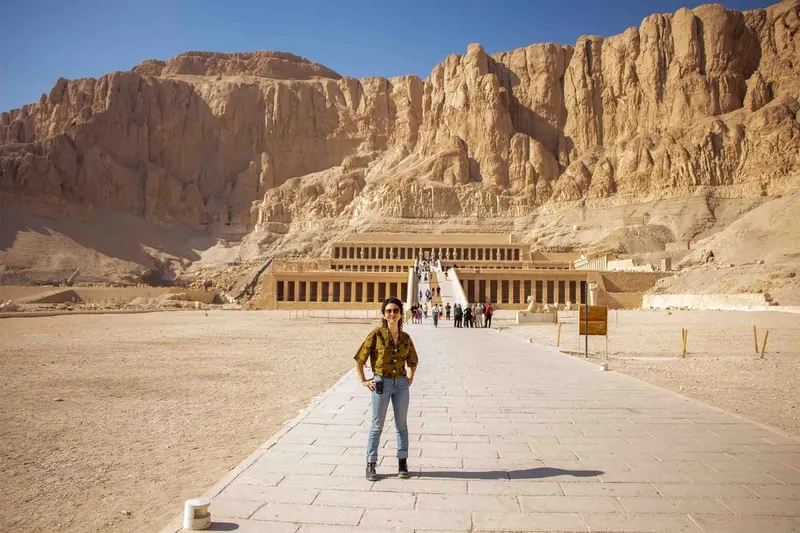
Book a private, air-conditioned full day to Dendera and Abydos Temples in the north of Luxor, which are two of Egypt's most complete ancient sites and ancient Egypt's principal cult center for the gods Osiris and Hathor, where painted ceilings more than two thousand years old have survived almost untouched.
Read moreRead less
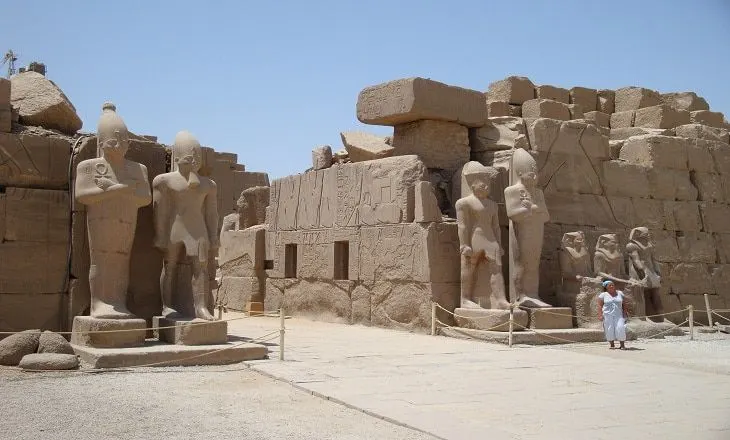
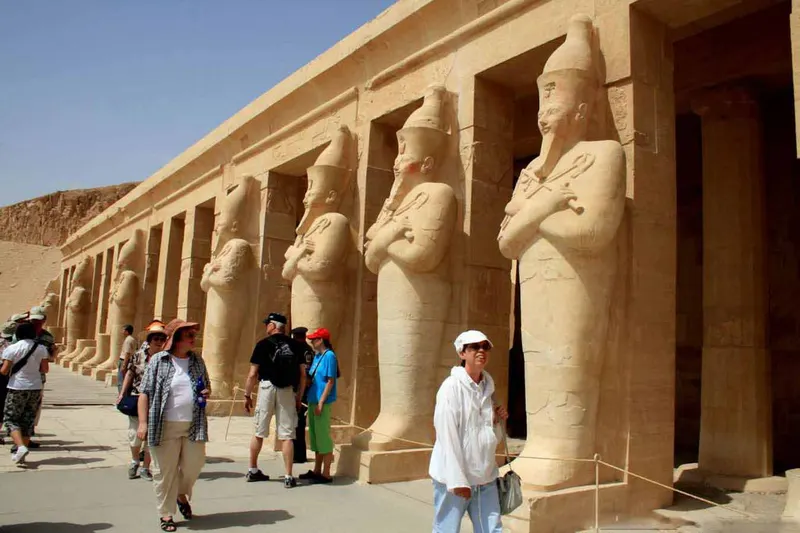
Tour code PLAD8 includes a licensed Egyptologist guide who reads the hieroglyphic captions on the walls as you walk, not from memory. Most Luxor itineraries skip both sites, since Abydos sits roughly three hours north. That distance is exactly what keeps this day worth planning for. Why drive three hours out of your way for two temples? Because both temples are still standing in a way most ancient sites aren't. According to the American Research Center in Egypt, the Temple of Seti I in Abydos, with its unusual L-shaped plan and seven chapels, and built mostly from limestone, its colors have never needed to be repaired since the New Kingdom era. Also, Abydos temple has sat on UNESCO's Tentative List for World Heritage status since 2003, and in 2022, the World Monuments Fund added it to its biennial Watch List of sites facing the most pressing conservation challenges. For Dendera Temple, it was finished under Roman rule, dedicated to Hathor, the goddess of joy, music, and love, who had already been worshipped in that same place for thousands of years. (Our guides keep the playlist tasteful, promise.) Of our reviews across all sites, over 100 describe seeing both Dendera and Abydos temples as a pinnacle of their trip for a single day, exactly how this tour (code PLAD8) runs. Temple of Seti I, Abydos: A temple that consists of seven chapels for god Osiris and six other gods, linked by a hypostyle hall (a hall whose roof rests on columns). Its limestone reliefs rank among the finest surviving New Kingdom artwork in Egypt. The Abydos King List: A carved writing relief naming 76 royal predecessors of King Seti I, starting with King Menes. According to Britannica, “The Abydos King List” remains one of the primary documents that Egyptologists use to establish ancient Egyptian historical chronology. The Osireion: A subterranean structure made of granite, which was built as Osiris's symbolic tomb. ARCE dates Abydos's continuous history back almost 7,500 years (Not included in this tour and requires an extra price). Temple of Hathor, Dendera: A temple dedicated to god Hathor, which has a painted hypostyle hall, ornate with Hathor-headed columns, underground crypts, and a rooftop chapel. According to UNESCO, construction began in 54 BCE under King Ptolemy XII, and then the Roman emperors completed the temple over the following century. The Dendera astronomical ceiling: A ceiling known for its painted scenes that once mapped the journey through the afterlife using constellations. Note that the original ceiling Dendera Zodiac was stolen in 1820 and now sits in the Louvre. Egyptologists Sylvie Cauville and éric Aubourg later dated its planetary configuration to between June and August of 50 BCE, early in Cleopatra VII's reign. What you'll see at Dendera today is a faithful plaster replica. This single day to Dendera and Abydos Temples covers roughly 3,000 years of Egyptian history. The Abydos Temple held the first dynasty of royal tombs from around 3100 BCE. According to UNESCO, the Book of the Dead called Abydos "the island of the Just," confirming its long-held role as Egypt's primary pilgrimage site. Dendera's temple was started in 54 BCE and finished under Roman emperors. In general, this day trip covers Egypt's earliest dynasties to its Roman era, in a single day. This tour suits travelers who'd rather understand a temple than just photograph it, like history readers, Egyptology students, and returning visitors who've already done Karnak Temple and Luxor Temple and want to go deeper. Solo travelers specifically will find this tour to Dendera and Abydos Temples in private format especially useful, since depth and pace adjust to what you actually want to see. It also suits well for anyone researching ancient Egyptian religion or Greco-Roman Egypt specifically. Families with young children, or guests short on time, usually prefer a shorter tour to the West Bank instead, but it also works just fine for them if they have already done the West Bank tour. Every guide on tour “PLAD8” is a certified Egyptologist who holds several university degrees and is able to read hieroglyphic captions as you walk rather than reciting from memory. Why does this matter most for the Abydos and Dendera Temples tour? Because visitors need to understand the ritual purpose of the seven chapels, the political logic behind the King List, and the astronomical structure of Dendera's ceiling, all of which need expert context to make sense. For our drivers, we hire only high professionals who know the roads in Egypt, and in this case, the Abydos route and its checkpoints, with every vehicle being air-conditioned with free bottled water on board for you. The Physical activity is moderate: expect uneven stone floors at the temples, a staircase up to Dendera's rooftop chapels, and several hours on your feet. Comfortable closed shoes and a hat are worth packing. Entry tickets to both complexes aren't included in the tour price, but we can book them for you upon request, and your coordinator will confirm current fees when you book. Usually, pickup runs between 5:00 and 6:00 AM, since Abydos sits about three to three and a half hours north of Luxor. Note that this is one of the longest day trips we run; the early start also means reaching both sites before the midday heat and before most people, and finding the Dendera and Abydos temples crowded. From Abydos, you backtrack roughly ninety minutes south to Dendera, then return to Luxor by early evening. When our guest kj b stood inside the Temple of Seti I, it was the original wall colour that stayed with them most, and our guide Rabie and driver Mahmoud both got a specific mention too — as they said: "If you see nothing else in Egypt - see Abydos. The colors and carvings will amaze you." – kj b | Read the full review on TripAdvisor When our guest David K reached Dendera with guide Khaled, and it was the ceiling that won him over, as he said: "Dendera was one of our favourites. The walls, columns and ceilings are highly detailed and coloured." – David K | Read the full review on TripAdvisor Also, when our guest Sebastian Schöneck took both temples in a single day, the driver and the price stuck with him as much as the sights did, as he said: "magnificent sights… making this one of our highlights during our stay in Egypt." – Sebastian Schöneck | Read the full review on Google Tour code PLAD8 covers the Dendera and Abydos Temples in one private day trip from Luxor. Abydos has a history stretching back roughly 7,500 years (ARCE) and has sat on UNESCO's Tentative List for World Heritage status since 2003. The Abydos King List names 76 pharaohs and remains one of the key chronological records of ancient Egyptian kingship (Encyclopaedia Britannica). Dendera's Temple of Hathor was built starting in 54 BCE and completed under Roman emperors. Note: the original Dendera Zodiac is now in the Louvre; today's ceiling holds a plaster replica. Includes a certified Egyptologist guide and private air-conditioned transport. Entry tickets aren’t included and confirmed at booking. Expect a 3 to 3.5-hour drive each way, an early pickup, and moderate walking with stairs. Yes. Dendera's Temple of Hathor is one of Egypt's best-preserved temples, with original painted ceilings, twenty-four Hathor-headed columns, underground crypts, and a rooftop chapel reachable by staircase. Expect to witness the strong original colors –as they have been for thousands of years–, a moderate level of walking, and a site that rewards having a guide, since most of what's carved there isn't explained on any of the plaques at the temples. Yes, you can visit the Dendera and Abydos Temples on a private tour by yourself. You do not need to visit them on a group tour, so the visit moves at whatever speed you want. Early morning between 05:00 and 06:00 AM, ideally between October and April, when the weather is nice, and before the heat builds and before Nile cruise groups arrive. On this tour (code PLAD8), pickup is scheduled between 5:00 and 6:00 AM specifically so you reach both Dendera and Abydos Temples ahead of the midday sun and the larger tour groups arrive at the temples. Plan for around 3 hrs. To get to Dendera Temple and spend 2 hours exploring the temple. And when it's paired with the Abydos temple, as it is on this tour, add up to another 2 hours exploring the Abydos Temple. That's enough time to see the hypostyle hall, descend into the crypts, and climb to the rooftop chapels with a guide. The ceiling at Dendera Temple is special because it holds one of ancient Egypt's most detailed surviving astronomical scenes, with painted constellations once used to chart the journey through the afterlife. Egyptologists Sylvie Cauville and éric Aubourg dated the original relief's planetary configuration to between June and August of 50 BCE, early in Cleopatra VII's reign. Also, astronomer John H. Rogers called it "the only complete map that we have of an ancient sky." Note that the original ceiling was stolen in 1820 and now sits in the Louvre, and the ceiling at Dendera Temple is a plaster replica. Abydos was ancient Egypt's principal cult center for god Osiris, with a history that runs back roughly 7,500 years, according to the American Research Center in Egypt. It also holds the First Dynasty royal tombs older than the pyramids, the Temple of Seti I, and the Abydos King List naming 76 pharaohs. It has sat on UNESCO's Tentative List for World Heritage status since 2003, and the World Monuments Fund also added it to its 2022 “Watch List”. We can offer you a private driver and an air-conditioned car. Also, every PLAD8 booking includes a private driver and an air-conditioned vehicle, already familiar with the route, checkpoints, and timing for the roughly 3 to 3.5-hour drive each way from Luxor. There's no need to arrange transport separately. Inside Dendera Temple, you'll walk through the painted hypostyle hall (a hall whose roof rests on columns) with its Hathor-headed columns, descend into underground crypts once used to store sacred temple objects, and climb a stone staircase to rooftop chapels overlooking the complex. The astronomical ceiling and reliefs of Cleopatra VII are part of the standard visit as well. We'd say a 100% yes, which is why we include one on this tour. The ritual purpose of Abydos's seven chapels, the political logic behind the King List, and the astronomy built into Dendera's ceiling, all aren't explained anywhere on site. We can provide a certified Egyptologist tour guide as part of your booking price, so you're reading the wall itself rather than a sign next to it. Abydos was built as god Osiris's symbolic burial place rather than a temple for the daily cult of a living king, which is why the Dendera Temple has its unusual L-shaped floor plan, along with seven parallel chapels instead of one central sanctuary. It also draws far fewer visitors than Luxor or Karnak Temples, so you're looking at 3,000-year-old limestone reliefs without the crowds. Note: This itinerary to Dendera and Abydos Temples (code PLAD8) asks more of your day than any standard Luxor itinerary, such as an early start, a long drive, and fewer comforts along the way. What it gives back is two of Egypt's most complete temples, explained by a professional & certified guide who can actually read and explain what's carved into the walls. Your coordinator will check available dates and confirm ticket pricing whenever you're ready to book. Not the easiest day trip from Luxor, but not the most crowded. Tour code PLAD8 is ready to book.
What makes this trip worth booking?
Your trip, hour by hour
Private Day Trip to Dendara and Abydos Temples from Luxor
6:00 AM - Hotel Pickup, Luxor Your driver and Egyptologist guide meet you at your hotel lobby. Water is already in the car. You leave the city while it's still cool. 6:00 – 9:00 AM - Drive North to Abydos (almost 160 km) Three hours through the Nile Valley. The road is straightforward, and the countryside along it is genuinely good. Your guide uses the drive to walk you through what you're about to see at Abydos, such as the ancient gods' religious rituals, the dynasties, and the layout, so you arrive with context, not questions. 9:00 AM - Arrive at Abydos Arrive before the midday heat and before any larger groups. That matters at a site this size. 9:00 – 11:30 AM - Explore Abydos Temple Start exploring the Abydos temple, which was ancient Egypt's principal cult centre for god Osiris -god of the afterlife- with a documented history stretching back roughly 7,500 years ( ARCE ). The Temple of Seti I (c. 1280 BCE), with its L-shaped structure and seven chapels dedicated to Osiris and six other gods, was built from limestone in colors the ancient Egyptians never needed to restore. Your guide walks you through: The Seven Chapels, each dedicated to a different god, each with intact wall paintings still reading the stories they were carved to tell The Abydos King List, a corridor relief naming 76 pharaohs, from King Menes to King Seti I, and is one of the main documents Egyptologists use to date ancient Egyptian kingship ( Encyclopaedia Britannica ) 11:30 AM–12:30 PM — Lunch stop Your driver pulls over somewhere between Abydos and Dendera for a delicious Egyptian dish; you're heading south now, back toward Luxor. An hour to eat, sit down, and decompress between temples. 12:30–1:30 PM — Drive to Dendera (~1 hour south) Dendera sits about halfway between Abydos and Luxor, which means you're covering ground toward home while you go. Efficient, the ancient Egyptians. 1:30 PM — Arrive Dendera 1:30–3:30 PM — Dendera: Temple of Hathor Construction here began in 54 BCE under Ptolemy XII and was completed by Roman emperors over the following century ( UNESCO ). Dendera is one of the best-preserved temple complexes in Egypt; with the paint still on the columns, the ceilings are still up, and you can go from the ground floor to the roof in one visit. What you'll cover: The hypostyle hall, 24 massive columns with Hathor-headed capitals (hypostyle: a hall whose roof rests on columns), painted astronomical scenes on the ceiling above The underground crypts, narrow storage chambers hidden beneath the floor, where the temple's sacred objects were kept The rooftop chapel, climb the staircase; the views over the complex are worth it The astronomical ceiling, one of ancient Egypt's most detailed sky maps, with constellations dated by researchers Sylvie Cauville and éric Aubourg to between June and August 50 BCE, during Cleopatra VII's reign Note that the original circular Dendera Zodiac — described by astronomer John H. Rogers as "the only complete map that we have of an ancient sky" — was removed from the ceiling in 1820 and now sits in the Louvre. The ceiling at Dendera today holds a faithful plaster replica. 3:30 PM — Drive Back to Luxor (~1.5 hours) ~5:00 PM — Back at Your Hotel The pharaohs had 10,000 workers. You just needed one good guide and an early alarm. Before You Go Set two alarms. Pickup is at 6:00 AM sharp, and the drive schedule doesn't have slack. Wear closed shoes. Both sites have uneven stone floors, and Dendera has stairs to the roof. Bring a hat. Even in cooler months, you'll be outside between temples. Entry tickets aren't included in the base price; your operator confirms current fees at booking. Best months: October through April. If you're visiting in summer, the early start is doing more work than you think.
What's included and what isn't
What's included
- Pick up services from your hotel in East bank Luxor and return
- All Transportation by a private air-conditioned vehicle
- Qualified English Egyptology Guide
- Bottled Mineral Water
- Taxes
Not included
- Airport Pickup
- Entrance fees
- Lunch
- Tipping